Alexandre Bonazzi — NeozOne. Originally published on November 2, 2026. English translation by Sargawatt. Read the original article on NeozOne (in French).
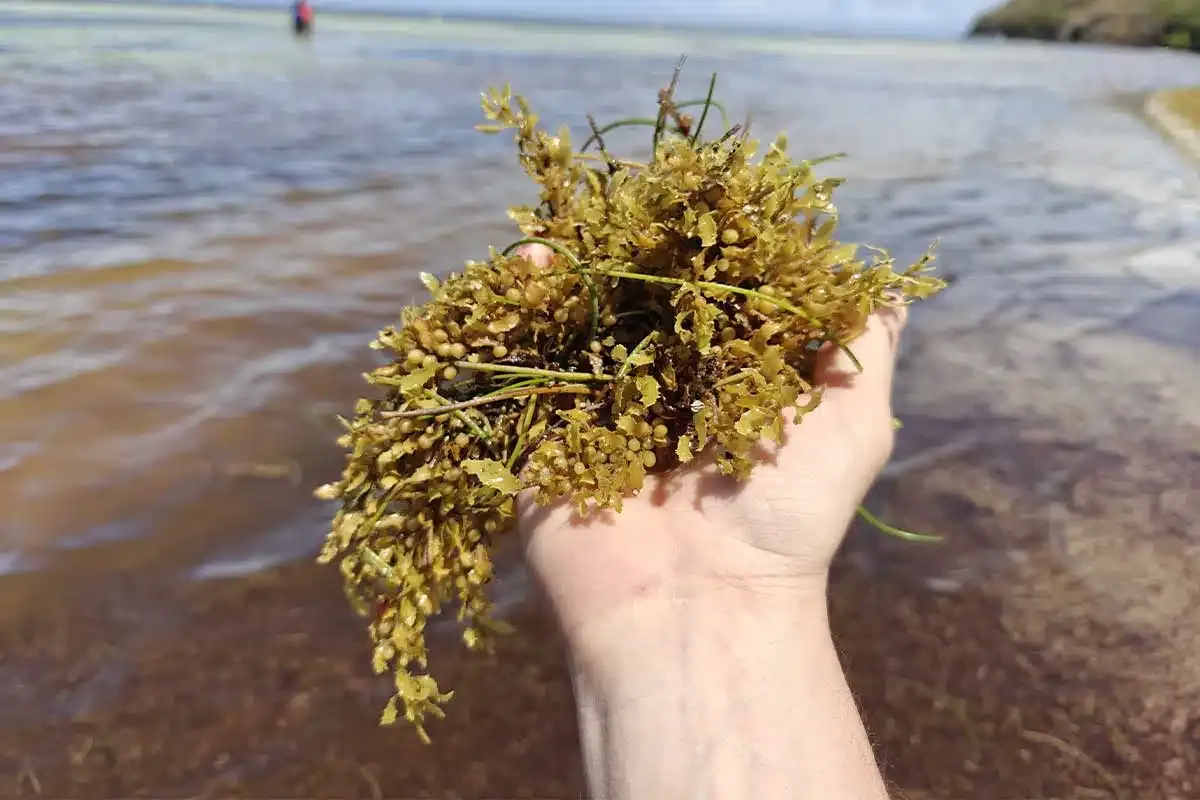
During my trip to Martinique, I saw the extent of the damage caused by sargassum. These brown seaweeds, which sometimes accumulate on beaches in staggering quantities, are a real scourge for residents, tourism professionals and the environment. On NeozOne, we had already covered several initiatives seeking to turn this seaweed into building materials or fertiliser.
But Sargawatt, a company based in Martinique, is proposing a different approach: collecting it before it even reaches the shore. Featured on the Solar Impulse Foundation website, this solution deserves a closer look. Let’s find out more.
Why collect sargassum before it washes ashore?
Once it reaches the beach, sargassum becomes particularly difficult to manage. As it decomposes, it releases hydrogen sulphide and ammonia, two gases that cause unpleasant odours and pose health risks. Collecting it also requires machinery, personnel and numerous trips to transport the seaweed—not to mention the sand removed along with it.
I personally saw sargassum completely engulf a beach, preventing local people from fishing and tourists from swimming! Then there is the smell: truly foul! This is the set of problems that Matthieu Bergot and Bruno Sainte-Rose, Sargawatt’s co-founders, decided to tackle at the source. Their invention, called SargaJet, is a floating structure towed by a conventional boat.
It collects the seaweed directly at sea using nets that fill automatically. And unlike large specialised machines, the device has no additional engine or onboard electronics.
How does this unusual floating machine work?
The principle is relatively simple. A boat tows SargaJet to the sargassum mats. The seaweed is guided into large nets, which are then retrieved and brought ashore. According to Sargawatt, each net can hold more than 500 kg of seaweed. The company reports a collection capacity of up to 60 tonnes of sargassum per day, equivalent to 240 large collection bags.
Another advantage: the structure can reportedly be dismantled in under 30 minutes and transported in an ordinary van. The company also claims substantial savings, ranging from 50 to 90% compared with certain existing methods. These figures will, however, need to be confirmed during regular operations.
The project also has a distinctive feature that illustrates the connection between mainland France and its overseas territories. SargaJet was developed with engineering students from Icam in Lille. The prototype was notably tested on the Deûle before being taken to the Caribbean.
SargaMap: anticipating arrivals to act at the right time
Collecting the seaweed is one thing, but first you need to know where it is! That is the role of SargaMap, a tool that uses satellite imagery and drones, among other resources, to locate the mats and anticipate their movements. The aim is to send boats to the right place at the right time, rather than carry out unnecessary operations. Sargawatt is also developing SargaDry, a process designed to dry the seaweed to make it easier to transport and put to use.
This seaweed could become a resource. We previously covered an initiative seeking to turn sargassum into biofuel. Presented on October 22, 2026 in Le Robert, Martinique, SargaJet is continuing its development following an initial proof of concept in 2025. The company is now working on a version intended for operational use. Having seen the damage first-hand, I find this approach particularly interesting.
Rather than waiting for beaches to be overwhelmed, why not intervene earlier? To learn more, visit the official website: sargawatt.com. What do you think: could collection at sea finally provide a lasting response to the sargassum problem?
Source: NeozOne — Alexandre Bonazzi, November 2, 2026 (in French). English translation by Sargawatt. Reported performance claims remain attributed to their source, with the original article’s reservations preserved.