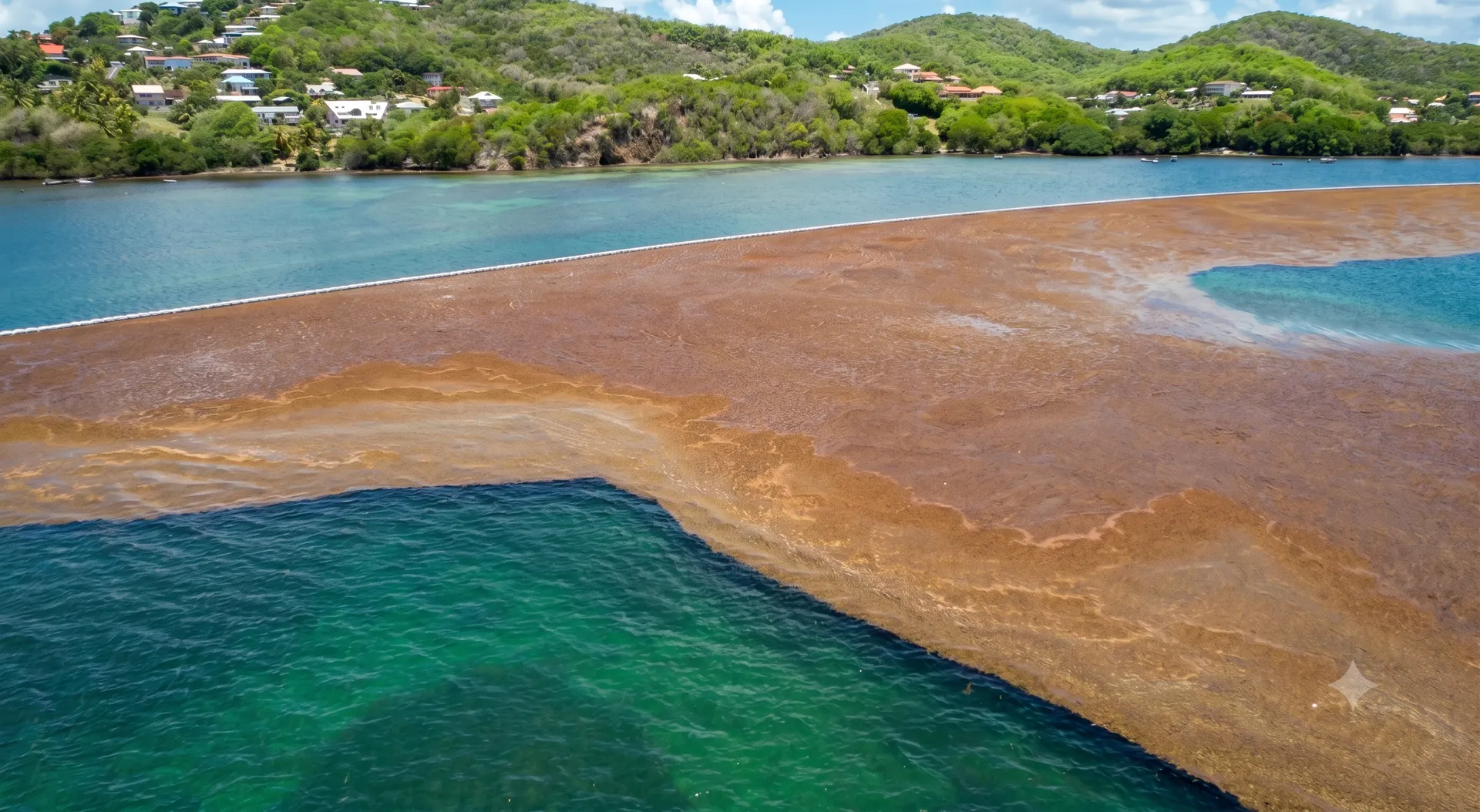
Every spring, the same scene plays out on the beaches of the Caribbean and the Gulf of Mexico. Vast rafts of brown algae drift in from the Atlantic, wash ashore by the thousands of tonnes and turn tourist bays into places that residents and travellers alike abandon. What was an anomaly fifteen years ago has become a season in its own right, with its peaks, its health alerts and its dedicated budgets.
For coastal hotels and local authorities, the question is no longer whether the sargassum will return, but how to limit its impact before it reaches the shore. And on that point, the recent data leave little room for doubt.
- 37.5 million tonnes: the estimated mass of the great Atlantic sargassum belt in May 2025.
- 48 hours: the point after which onshore decomposition can turn a nuisance into a health risk.
- Up to 50%: potential reduction in collection costs with SargaJet®, depending on site conditions.
A bloom of unprecedented scale
In May 2025, the great Atlantic sargassum belt reached roughly 37.5 million tonnes, an all-time high since satellite monitoring began. That volume is nearly 58 percent above the previous peak, set in June 2022 at around 22 million tonnes. The outlook for 2026 points the same way: several scientific teams anticipate another potentially record year.
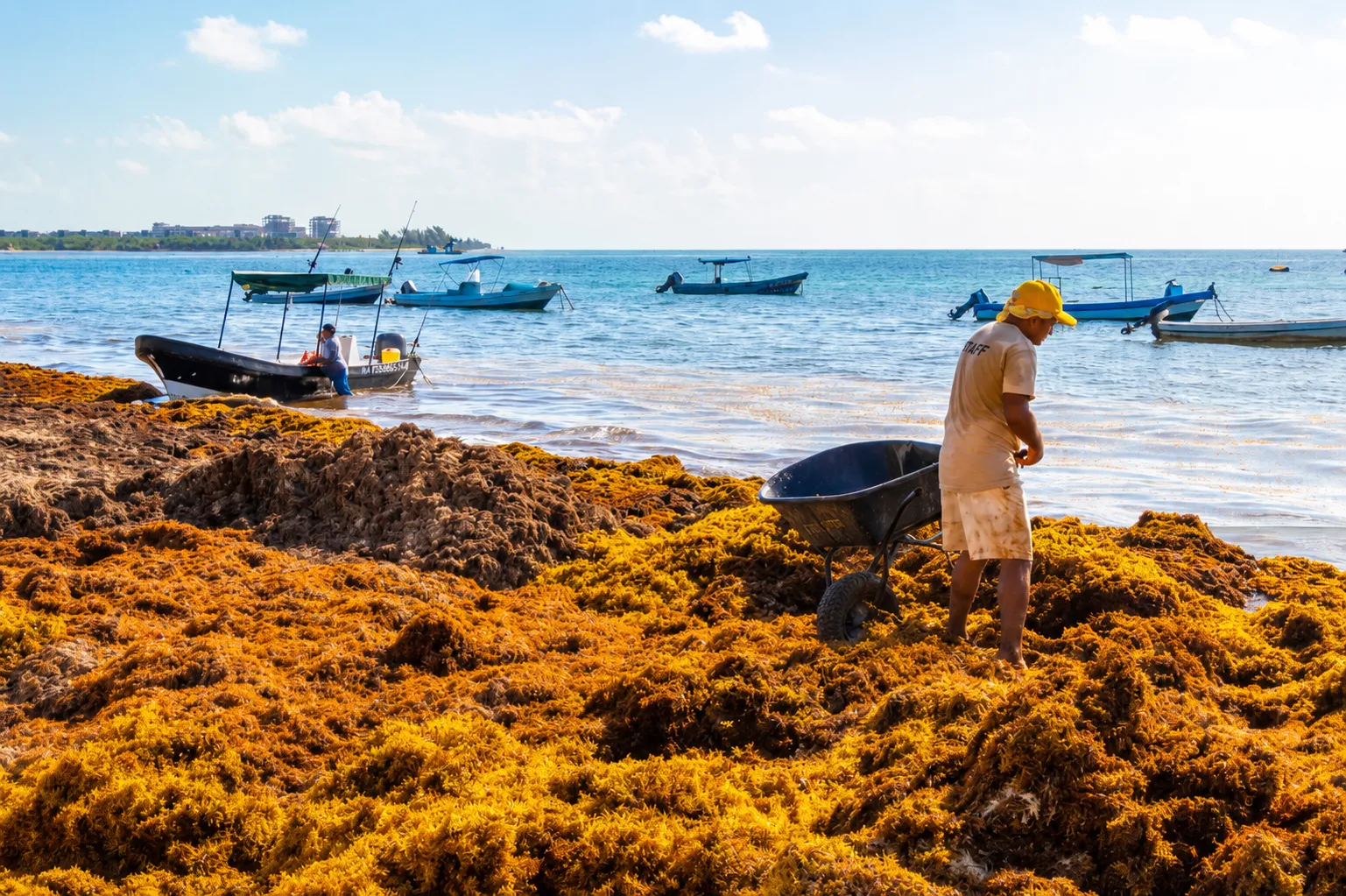
In practice, that mass translates into massive, repeated strandings. In 2025, Mexico removed more than 76,000 tonnes in the state of Quintana Roo alone, including over 13,000 tonnes in Cancún. In the French Antilles, Martinique collected about 7,600 tonnes at sea, while Saint-Martin reached nearly 14,000 tonnes gathered between February and September.
No coastal stakeholder is spared. Where tourism is a decisive part of the economy, a beach buried under rotting algae translates directly into cancellations, negative reviews and lost revenue.
Forty-eight hours to act
As long as it floats, sargassum is merely a visual and logistical nuisance. The trouble starts once it reaches land. After roughly 48 hours ashore, the decomposing organic matter releases toxic gases, chiefly hydrogen sulfide and ammonia.
Hydrogen sulfide is no minor matter. Recognisable by its rotten-egg smell, it produces health effects even at low concentrations and can become dangerous at high exposure, especially in confined spaces. For a hotel, that means unusable seafront rooms, exposed staff and, at times, temporary closures.
This 48-hour window is the crux of the whole issue: algae removed before they rot give off no gas, do not corrode installations and do not drive guests away. When you collect matters as much as how much you collect.
Cleanup budgets are spiralling
The cost of cleanup tracks the volume of arrivals, and it climbs fast. In Martinique, at-sea collection alone rose from about 1 million euros in 2024 to 1.7 million in 2025. In Saint-Martin, the overall bill exploded, from 700,000 euros in 2022 to 4.4 million in 2025. Per tonne, collection and treatment already cost more than 130 euros there in 2024.
Across the French Antilles, the Sargassum Plan II mobilised 36 million euros between 2022 and 2025 for Martinique, Guadeloupe, Saint-Martin and Saint-Barthélemy. In the United States, some estimates put the cost of removal at more than 120 million dollars a year in the hardest-hit areas.
Behind these figures lies a simple reality: onshore removal, scooping algae with heavy machinery off already saturated beaches, is the most expensive and least effective option. It comes too late, ties up heavy resources and damages the sand in the process.
Why collecting at sea changes the equation
Intercepting sargassum before it strands turns the logic around. By capturing the rafts offshore or as they approach the coast, you act during the window when the algae are still inert, clean and concentrated. The benefits add up: no toxic-gas emissions, no degraded shoreline, no interruption to hotel operations, and an intervention that can be planned rather than handled in a rush.
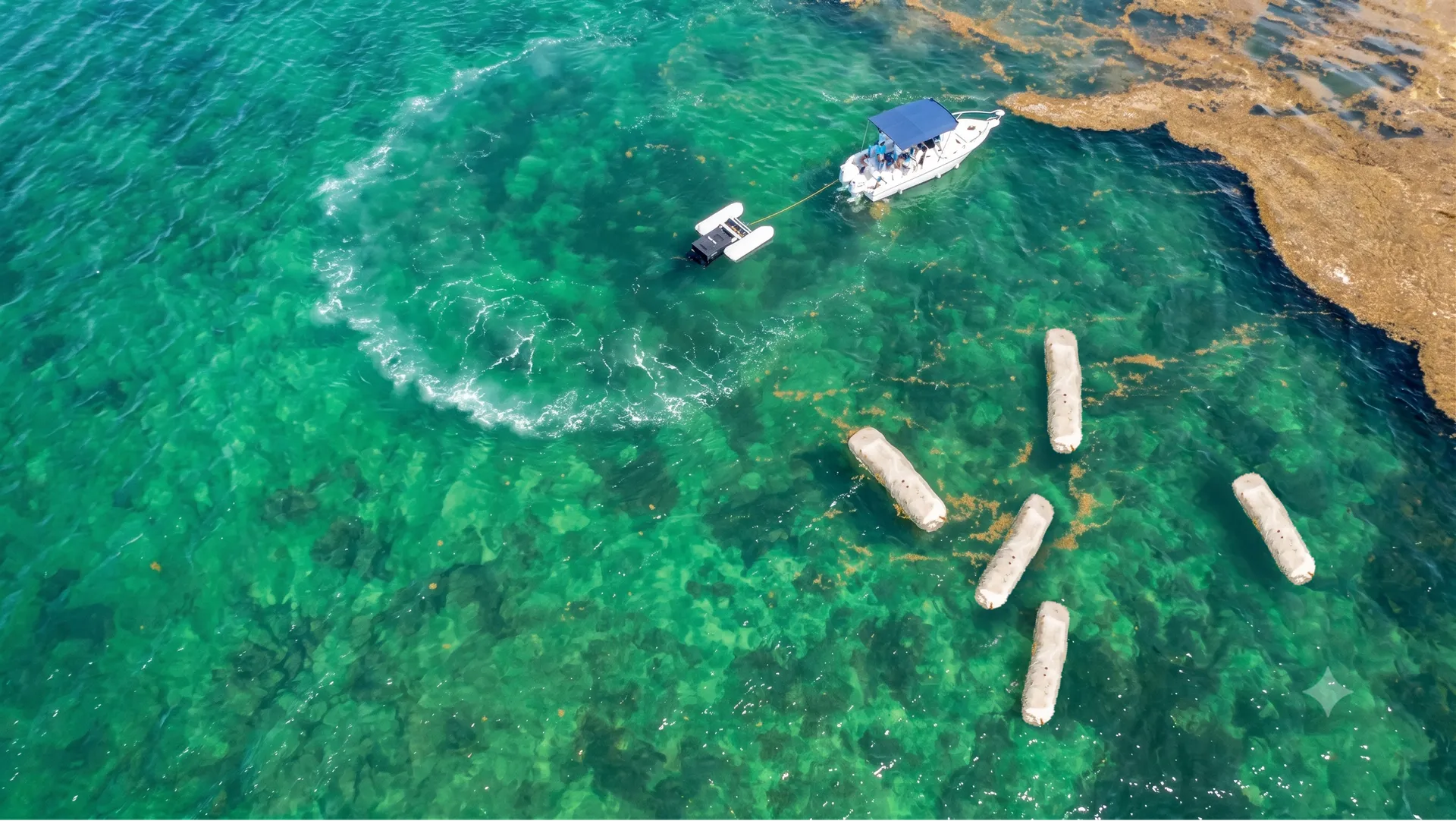
This is the path Sargawatt has chosen with SargaJet®, an at-sea collection system designed to reduce sargassum collection costs by up to 50% compared with existing methods, depending on site conditions. Paired with SargaMap, which helps anticipate arrivals, it makes it possible to plan interventions at the right time and the right place.
Hotel or local authority? Estimate your potential savings or discover the SargaJet®.
Collecting early also protects the resource
There is another, less obvious but decisive reason to collect quickly: the quality of the biomass. The longer sargassum lingers in the water and then on the sand, the more sand, salt and contaminants such as arsenic, or locally chlordecone, it accumulates. And that quality is precisely what determines its value once processed.
Because sargassum is not just waste. Captured fresh, at sea, it becomes a reliable, traceable raw material sought after by manufacturers and laboratories developing fast-growing applications: agricultural soil amendments and biostimulants, biochar, methanisation, alginate extraction and cosmetics.
Sargawatt does not process the algae itself: the company secures access to this quality biomass for the organisations that process it. A resource captured early opens outlets that stranded, degraded algae almost always close.
Manufacturer or laboratory? source traceable sargassum biomass or request a sample.
Regaining control, season after season
Sargassum is no longer a freak weather event: it has become a structural feature of Caribbean coastlines, and 2026 is shaping up to be another season under strain. For hotels and local authorities, waiting for the stranding means choosing the most expensive option, the riskiest for health and the most damaging to their image.
The opposite approach, anticipating and collecting at sea, turns an emergency expense into a managed strategy, and waste into a resource. That is where the difference now lies between enduring the brown tide and managing it.